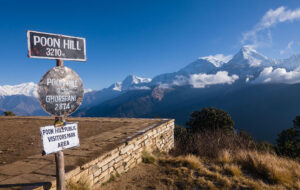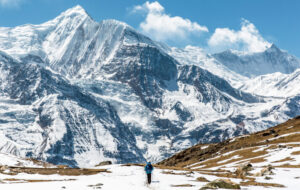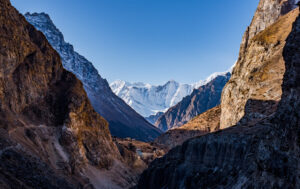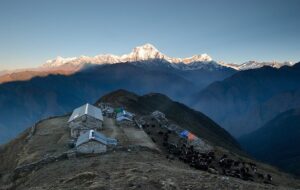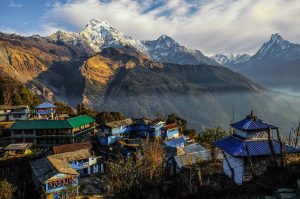
People who pay attention to nature and adventurous activities are captivated by Annapurna. A Himalayan masterpiece located in the middle of Nepal. The region is named for the magnificent Annapurna mountain. It is also known for its breathtaking combination of varied landscapes, towering peaks, and rich cultural tapestry.
The Annapurna region offers a kaleidoscope of natural beauty, ranging from the bountiful terraced farms at lower elevations to the lovely subtropical forests, rhododendron-clad hills, and glacial moraines at higher elevations. The Annapurna Massif includes other challenging mountains such as Annapurna II, III, IV, Gangapurna, Machapuchare, and Hiunchuli. Furthermore, the Annapurna Massif is home to Annapurna I, the world’s tenth-highest peak.
At the same time that it is a geographical marvel, the region is also a shelter for conservation efforts. The vast Annapurna Conservation Area, which is the largest of its kind in Nepal, protects a wide range of ecosystems and allows for the survival of a wide variety of flora and animals, including species at risk of extinction. In addition to being a physical excursion, trekking through this region is an opportunity to immerse oneself in the local culture.
There are many different ethnic groups that contribute to the complex cultural tapestry, with the Gurungs and Thakalis being some of the most prominent. Trekkers can get a look into the distinctive traditions of these communities through the observation of traditional architecture, music, and dance, as well as attending exciting festivals.
The Annapurna Circuit, the Annapurna Base Camp Trek, and the Mustang Trek are all examples of trekking routes that wind their way through these environments. These routes provide a variety of obstacles, attractive settlements, and breathtaking mountain panoramic views. Trekkers can stay in local hotels and enjoy traditional meals when they participate in the teahouse trekking experience, which adds a touch of comfort to the journey.
The Annapurna region may be accessed through the city of Pokhara, which is named after the tranquil lakes and breathtaking views it offers. Pokhara, easily accessible and bustling with activity, is a starting point for many unforgettable adventures into the heart of the Himalayas.
The Annapurna region is not only a destination for trekking; it is also a sanctuary where cultural variety and wildlife coexist alongside one another. Conservation initiatives highlight the significance of maintaining this natural beauty by ensuring that future generations will awaken by the splendor of the Annapurna region. The Annapurna region is a monument to the amazing beauty and cultural diversity of Nepal’s Himalayas. It reveals itself in every step that is taken and every settlement that is encountered.
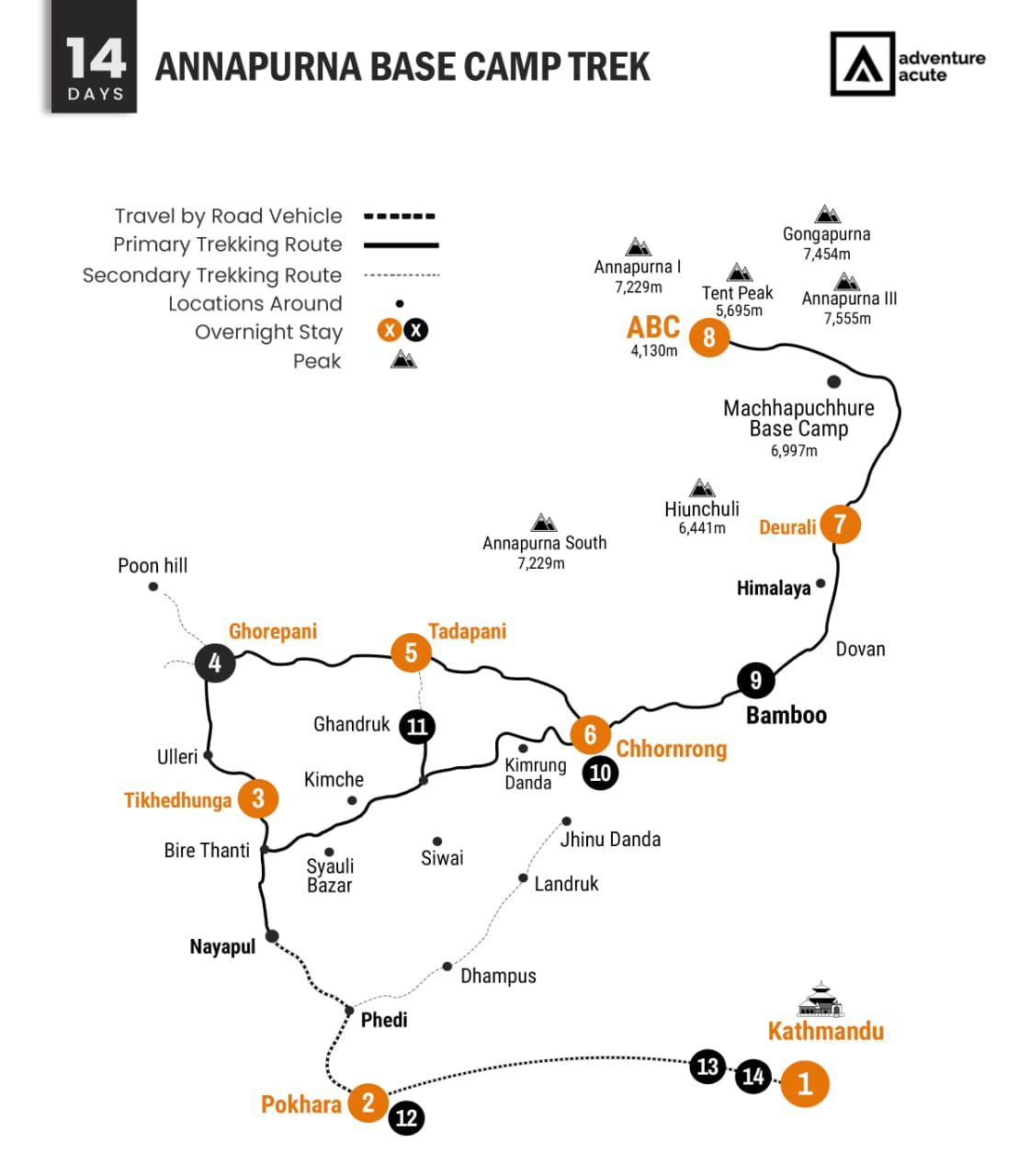
The Annapurna Base Camp trip is a spellbinding adventure that takes you into the heart of the Annapurna massif. Along the way, you will be treated to stunning vistas of some of the highest peaks in the world. A difficult journey across various landscapes, natural beauty, and cultural experiences are all included in this 14-day expedition that perfectly combines all three. The journey starts and ends in Nayapul, and it will take you past lovely towns, terraced farms, and rich rhododendron forests, ultimately leading you to the base camp of the magnificent Annapurna.
Important Information to Know:
Permits:
Before beginning the trek, you must have all the appropriate permits, such as the Annapurna Conservation Area Permit (ACAP) and the Trekker’s Information Management System (TIMS) card.
Altitude: Nepal’s Annapurna base camp trek is the highest point, 4,130 meters (13,549 feet) above sea level. You should be prepared for various altitudes along the journey. Acclimatization is absolutely necessary to prevent altitude sickness.
Weather:
Because the weather tends to change quickly, it is important to carry garments that can support both warm days and cold nights. Spring, which runs from March to May, and autumn, from September to November, are the best times to go hiking.
Accommodation:
Tea houses found along the road offer basic lodging and meals to anyone interested in staying there. We recommend you make early reservations for your teahouse during peak trekking seasons.
Terrain:
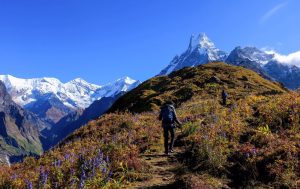
The journey starts in Nayapul, and from the very beginning, hikers are surrounded by the breathtaking landscapes of the Annapurna region. Terraced farms, quaint villages, and verdant rhododendron forests are all along the path that weaves across the landscape. Trekkers will notice a shift in the terrain as they rise, providing them with breathtaking vistas of snow-capped peaks and deep valleys. The most exciting part of the hike is arriving at Annapurna Base Camp, covered by towering giants such as Annapurna I, Machapuchare, and Hiunchuli. The spectacular amphitheater of peaks at the base camp provides an almost otherworldly experience, particularly during sunrise and sunset.

 Annapurna Region